Clearing elevated attics or below-grade basements in historic Columbia neighborhoods requires deliberate physical planning. In communities like Cottontown, Elmwood Park, and Earlewood, homes frequently feature steep…
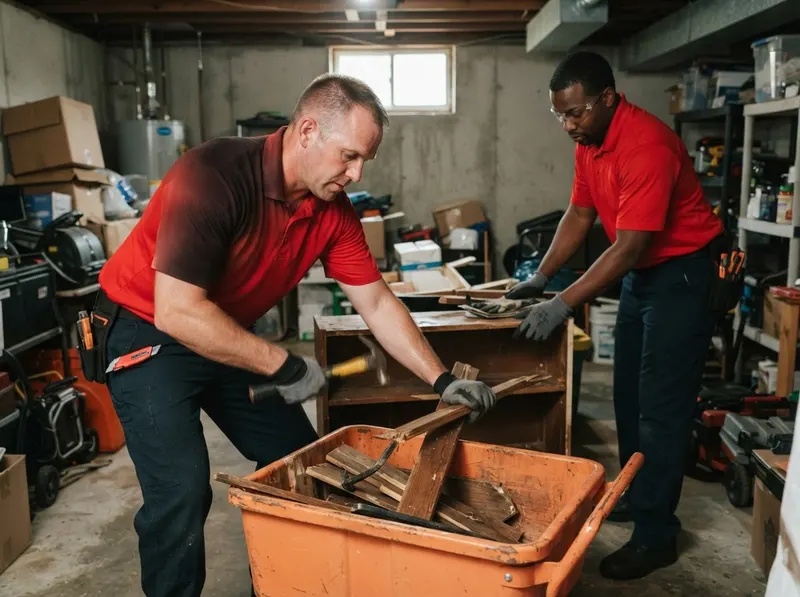
Clearing elevated attics or below-grade basements in historic Columbia neighborhoods requires deliberate physical planning. In communities like Cottontown, Elmwood Park, and Earlewood, homes frequently feature steep crawl-access attic stairs, tight basement cellar doors, and narrow shared driveways along tree-lined corridors. Stored items in these spaces often degrade under high summer humidity, leaving disintegrating cardboard, rusted frames, and dusty textiles that standard municipal curbside routes will not accept. The City of Columbia Solid Waste division restricts weekly collections to standard roll carts and enforces strict limits on loose residential bulk piles, routinely bypassing mixed attic insulation or basement structural remnants left on the curb. A dedicated waste removal service bypasses these municipal citations entirely by hauling debris directly from the structure into high-capacity transport beds.
Decision-fit depends on debris density, access logistics, and physical labor demands. If a project involves lightweight boxed holiday decor from an accessible ground-floor closet, waiting for local residential drop-off days may suffice. If the job involves hauling dozens of 40-pound boxes down narrow stairwells, rusted trunks from a low-clearance Olympia mill home basement, or decades of flooring cutoffs from a Heathwood attic, professional cleanout waste dispatch is necessary. The central trade-off is hands-on labor versus direct operational control: full-service removal eliminates personal injury risks on attic pull-down ladders and preserves vehicle interiors from heavy soot and fiber, trading sweat equity for a fixed, transparent haul-away rate.
Operational execution follows a four-step process. First, technicians inspect the access path from the attic scuttle or basement bulkhead door through to the transport vehicle, laying floor protection along interior halls. Second, bulk materials are categorized by weight and volume, separating scrap metals from general municipal solid waste to ensure efficient loading. Third, items are carried out and packed tightly into the hauling unit, using timber blocking to prevent shifting during transit down major corridors like Millwood Avenue, Assembly Street, or Rosewood Drive. Fourth, the staging area is swept clean of loose nails, plaster dust, and insulation scraps, with all collected tonnage routed directly to licensed Richland County disposal sites.
Every job gets a firm, written price after a free on-site visit.
Tell us about your basement and attic cleanout waste service job in Columbia and we'll send a clear, written quote, usually the same day.
 LoadLine Dumpster Rental