Commercial waste management demands punctuality because unattended trash containers create code violations and block busy commercial loading zones. In dense entertainment sectors like The Vista, cramped rear service…
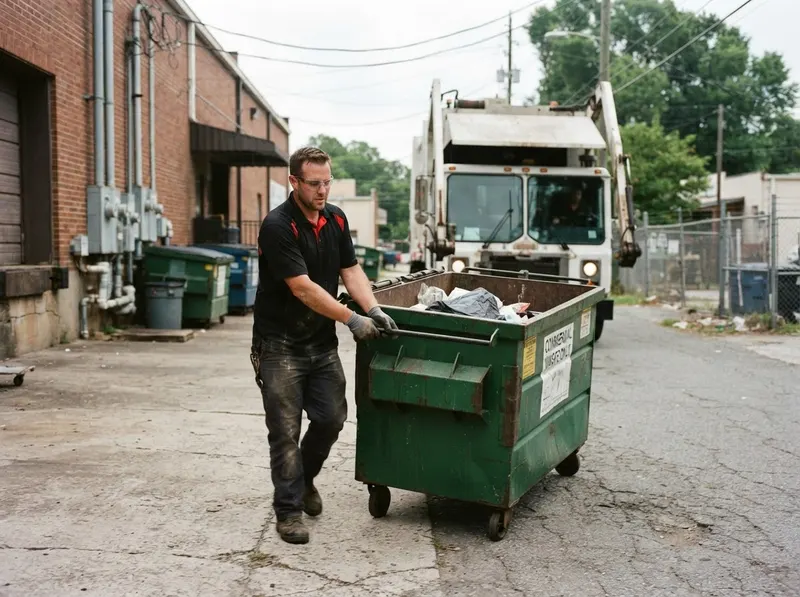
Commercial waste management demands punctuality because unattended trash containers create code violations and block busy commercial loading zones. In dense entertainment sectors like The Vista, cramped rear service alleys off Gervais Street require precise roll-off placement that prevents delivery obstruction. Meanwhile, retail centers along Forest Drive in Forest Acres demand strict scheduled cycles to clear out packaging cardboard, broken displays, and fixtures before morning store openings. While municipal services handle curbside solid waste for small storefronts on rigid routes, they reject heavy renovation drywall, crating lumber, and bulky retail tenant-turn scrap. Dedicated commercial dumpster hauling eliminates these strict volume caps, staging 10-yard to 30-yard open-top containers directly on-site to handle entire store retrofits in one organized sweep.
Selecting the proper collection footprint balances commercial parking limits against disposal tonnage fees. Commercial properties along Main Street or narrow warehouse lanes in Olympia-Granby benefit from compact 10-yard or 15-yard bins that match tight loading bays, though high-volume construction teardowns require larger 30-yard boxes to prevent overflowing side rails. Opting for a smaller container keeps alley access open and avoids municipal lane obstruction fines, but heavy demolition work can trigger multiple retrieval swaps if bin volume is underestimated. For multi-family complexes near the University of South Carolina Horseshoe and mixed-use spaces in Cottontown, staging roll-offs with protective timber runners under the steel rollers shields high-traffic commercial asphalt and paved tenant parking lots from point-load damage.
Managing commercial debris effectively relies on straightforward execution: 1. Evaluate debris composition and choose a 10-yard, 20-yard, or 30-yard container footprint based on square footage and material weight. 2. Establish clear site drop zones that maintain at least 45 feet of clearance for truck roll-off hoists, steering clear of overhead utility lines and customer parking stalls. 3. Fill the container level with top rails while excluding restricted wet chemicals, industrial solvents, and commercial vehicle batteries. 4. Dial (839) 317-5196 to dispatch a retrieval truck for direct transit to authorized Richland County waste transfer centers, securing verified weight tickets without unexpected add-on broker fees.
Every job gets a firm, written price after a free on-site visit.
Tell us about your commercial waste and dumpster collection job in Columbia and we'll send a clear, written quote, usually the same day.
 LoadLine Dumpster Rental