Severe weather moving through the Midlands frequently brings down heavy canopy growth and damages residential properties. High winds snap mature water oaks and loblolly pines throughout historic corridors like Shandon,…
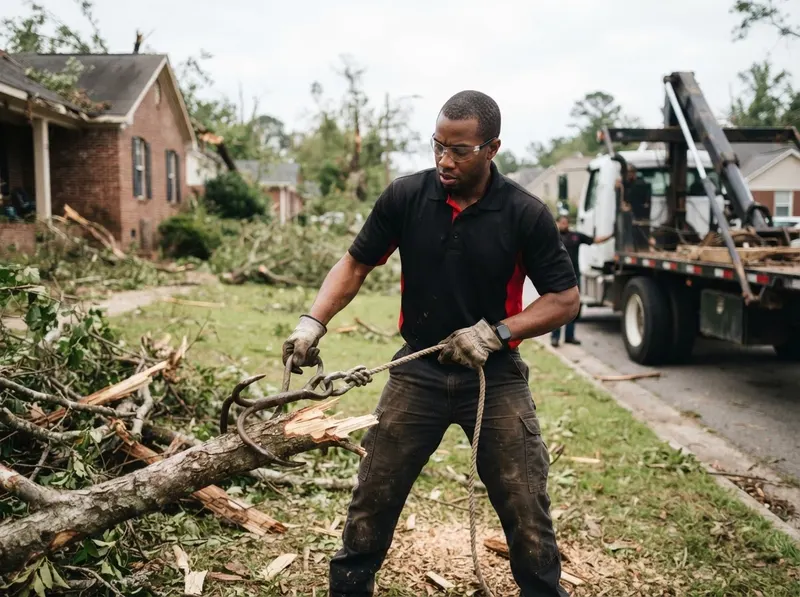
Severe weather moving through the Midlands frequently brings down heavy canopy growth and damages residential properties. High winds snap mature water oaks and loblolly pines throughout historic corridors like Shandon, Earlewood, and Elmwood Park, while flash flooding along Rocky Branch impacts low-lying yards across Olympia-Granby and Rosewood. Curbside piles quickly block narrow street access and sit outside municipal collection limits. City bulk trash collection routines enforce strict volume caps, frequently rejecting uncut limbs over 4 feet long or waterlogged structural components left by contractors. Dedicated storm debris collection resolves this bottleneck by utilizing heavy-duty trucks and dump trailers to clear high-tonnage materials in a single deployment, avoiding weeks of street citations and neighborhood hazards.
Selecting the correct clearance service depends on debris classification and driveway conditions. If a property in Forest Acres or Heathwood suffers purely green waste, such as shattered tree trunks and leaf mulch, brush chippers or flatbed grapple loaders haul the mass away cleanly. If a river squall tears off shingles and forces interior gutting near The Vista or Cottontown, mixed construction debris requires open-top transport containers that accommodate jagged timber and soaked gypsum board. A commercial dumpster rental leaves the loading labor to the homeowner, whereas direct-load debris hauling handles the physical clearing from ground to truck bed. Heavy equipment operators lay protective boards across asphalt and concrete driveways before staging machinery, eliminating surface cracks caused by point-load pressure.
Disposal procedures follow strict Richland County solid waste regulations. Mixed storm waste cannot simply be tipped into municipal yard-waste composting centers. Operators separate natural tree refuse from building construction wreckage prior to disposal, hauling green vegetation to designated wood-recycling facilities while routing contaminated building materials to permitted municipal solid waste landfills. Hauling invoices itemize standard labor, transit, and tonnage charges flatly, preventing surprise environmental add-ons or hidden landfill surcharges after the truck departs.
Every job gets a firm, written price after a free on-site visit.
Tell us about your disaster and storm debris waste hauling job in Columbia and we'll send a clear, written quote, usually the same day.
 LoadLine Dumpster Rental